
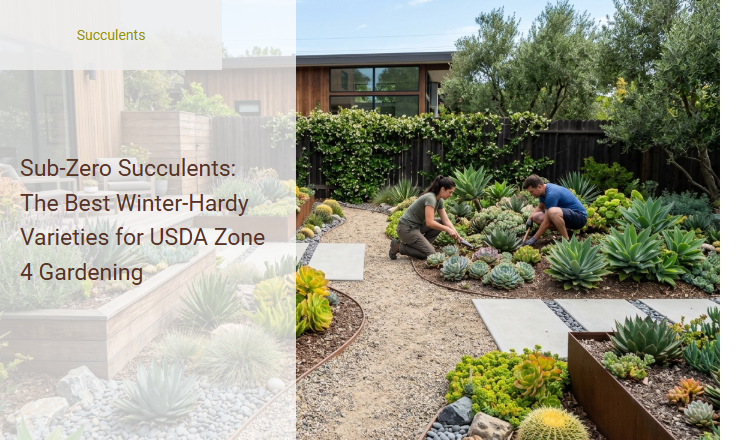
For gardeners in USDA Zone 4, the onset of winter often brings a familiar sense of frustration as sub-zero temperatures decimate delicate perennials and leave landscapes looking barren. Traditionally, succulents are dismissed as tender, desert-dwelling specimens entirely unsuitable for northern climates. However, certain high-alpine varieties possess unique cellular adaptations that allow them to survive extreme freezes.
Embracing these cold-tolerant species grants gardeners the ability to maintain striking, structural foliage and vibrant color throughout the bleakest months of the year. To achieve this, a critical stipulation must be met: these plants require flawless soil drainage, as wet winter soil is far more lethal than the cold itself. Proven genera like Sempervivum (Hens and Chicks) and select low-growing Sedum (Stonecrop) demonstrate that succulent gardening can indeed thrive in sub-zero environments.
In this article, we will examine the premier winter-hardy succulent varieties for Zone 4, detailing their specific cultivation needs, soil preparation strategies, and design applications for year-round interest.
Read also: Frost Cloth vs Indoor Moving for Winter Protection
Embracing the Cold: Succulents in Zone 4 Gardens
For many gardeners, the word "succulent" conjures up images of sun-drenched deserts, sandy coastlines, and frost-free climates. However, a remarkable group of cold-hardy succulents is shattering this myth of warm-climate exclusivity. In the icy depths of USDA Zone 4, where winters are fierce and unforgiving, these resilient plants do not merely survive-they thrive. Embracing cold-hardy succulents allows northern gardeners to curate stunning, structurally diverse winter landscapes that remain vibrant even when buried under a blanket of snow.
Decoding Zone 4: The Winter Environment
Gardening in USDA Zone 4 means preparing for extreme winter conditions where temperatures routinely plummet to -30°F. While the sheer cold is a significant factor, the true challenge of winter survival lies in the interplay between temperature and moisture. A dry, stable cold is relatively easy for hardy plants to tolerate. In contrast, winter wetness-the heavy, slushy moisture from melting snow and winter rain-is highly destructive, often leading to rot before the ground freezes solid.
Cellular Shielding: How Succulents Survive Sub-Zero Temperatures
To withstand extreme freezing, cold-hardy succulents utilize ingenious biological defenses. Through a process known as cold acclimation, these plants intentionally dehydrate their cells as winter approaches, reducing water volume to prevent cell walls from rupturing when ice forms. They also increase the concentration of sugars and solutes within their cell sap, lowering its freezing point in a manner similar to commercial AF. Furthermore, many species produce protective anthocyanin pigments that act as natural sunscreen and thermal shields, turning the foliage brilliant shades of red, purple, and bronze.
Sempervivum: The Undisputed Royalty of Cold-Hardiness
Commonly known as Hens and Chicks, the genus Sempervivum reigns supreme in northern rock gardens. These alpine survivors are perfectly adapted to heavy winter snowpacks, which actually serve as insulating blankets against harsh, drying winds.
- 'Red Rubin': Features large, tightly clustered rosettes that transition to a deep, dramatic burgundy during the coldest months.
- 'Cobweb' (Sempervivum arachnoideum): Instantly recognizable by the fine, white web-like threads spun across its leaf tips, which help trap heat.
Sedum: Vibrant Groundcovers That Weather the Storm
Sedums, or Stonecrops, offer an incredibly diverse range of low-growing groundcovers that are exceptionally tough. As temperatures drop, these groundcovers undergo a dramatic aesthetic metamorphosis, shifting from lush summer green to intense, fiery autumn and winter hues.
- Sedum spurium 'Dragon's Blood': Features bronze-green summer foliage that intensifies to a brilliant deep crimson as the freezing weather sets in.
- Sedum album (White Stonecrop): A creeping variety with tiny, bead-like leaves that blush a rich reddish-purple under winter stress.
Opuntia: Sculptural Cacti Built for the Deep Freeze
Perhaps nothing challenges conventional gardening wisdom quite like seeing a cactus thriving in a northern winter. Several species of Opuntia, or Prickly Pear, are completely comfortable in sub-zero environments, showing incredible resilience.
During late autumn, Opuntia humifusa and Opuntia fragilis shrivel up, lose their turgor pressure, and lay flat on the ground, looking completely deflated and dead. This dramatic water-shedding mechanism prevents internal ice crystallization. When spring arrives, they rapidly rehydrate, stand upright, and burst into stunning satiny blooms.

Perfecting the Substrate: Soil and Drainage for Winter Survival
In Zone 4, standard garden soil is a death sentence for succulents during the winter thaw. Creating an ultra-porous, gritty growing medium is the single most important step to ensure your plants survive to see spring.
- Select a sloped site or build a raised garden bed to encourage gravity-assisted water runoff.
- Mix equal parts of coarse builder's sand, agricultural pumice or perlite, and native loamy soil.
- Incorporate fine gravel or chicken grit into the planting hole to keep the collar of the plant dry.
Strategic Shelter: Protecting Your Plants from Winter Wet
Even with excellent soil, the combination of melting snow and sudden freeze-thaw cycles can test the limits of your plants. Active winter management can mean the difference between loss and success.
Surrounding the crown of each plant with a thick layer of pea gravel or chicken grit prevents wet soil from resting directly against the lower leaves. For species especially sensitive to winter rot, placing evergreen boughs over the bed provides excellent airflow while breaking the force of heavy, packing snow.
Spring Awakening: Revitalizing Your Succulent Bed
As the snow recedes and the spring sun begins to warm the soil, it is time to assist your succulent garden in its transition back to active growth. A little careful maintenance ensures a quick recovery. Gently clear away any accumulated leaf litter or debris that could trap moisture around the rosettes. Use sharp, sterilized shears to snip off any mushy or dead outer leaves, taking care not to disturb the main root system. Assessing the firmness of the stems will tell you which plants survived perfectly and which might need a little extra time to rehydrate and perk up.
Year-Round Resilience: The Lasting Appeal of Hardy Succulents
Designing a garden with cold-hardy succulents is a deeply rewarding endeavor that challenges traditional plant boundaries. These architectural wonders offer year-round structural interest, vibrant seasonal color shifts, and unmatched drought tolerance during the summer months. By pairing the right species with sharp drainage, you can create a thriving, low-maintenance landscape that scoffs at the coldest winter winds. Northern gardeners are encouraged to experiment with these resilient beauties, transforming cold-climate gardens into dynamic, year-round masterpieces.
Summary
Sub-Zero Succulents: The Best Winter-Hardy Varieties for USDA Zone 4 Gardening explores the resilient world of cold-tolerant succulents capable of surviving extreme winter temperatures down to -30°F. While these plants are typically associated with arid, tropical climates, specific varieties thrive in icy northern regions. The article highlights standout genera such as Sempervivum (Hens and Chicks) and various cold-hardy Sedum (Stonecrop) species, which naturally adapt to freezing conditions by shedding moisture and entering winter dormancy.
Additionally, the guide provides essential cultivation tips, emphasizing the critical importance of excellent soil drainage, gritty planting mediums, and proper site selection to prevent root rot during the spring thaw. By selecting the right varieties and preparing the soil correctly, gardeners in Zone 4 can enjoy vibrant, low-maintenance succulent displays that survive the harshest winters and return beautifully year after year.
Leave a comment