
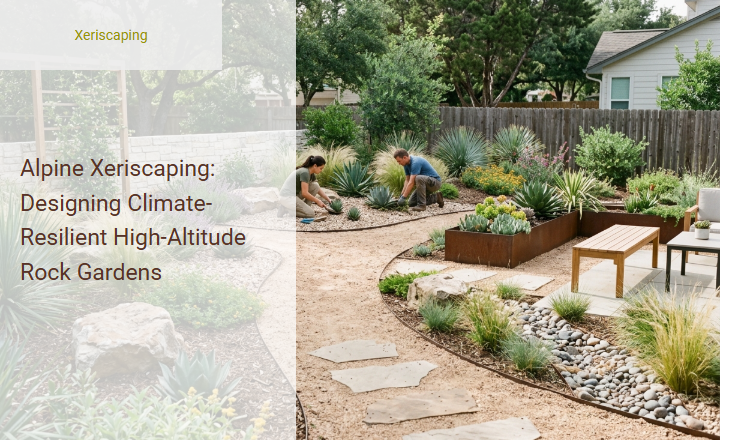
High-altitude gardening often feels like an uphill battle against the elements, where thin soils, parching winds, and intense UV radiation quickly wither traditional landscapes. To overcome these challenges, we must first shift our perspective to understand the unique, fragile microclimates of mountainous terrains before introducing new flora.
Embracing alpine xeriscaping grants homeowners a highly resilient, water-wise rock garden that delivers year-round aesthetic appeal with minimal intervention. However, success in these rugged elevations stipulates a strict adherence to proper soil drainage and precise microclimate mapping. Utilizing proven, drought-tolerant species like Sempervivum tectorum (Hens and Chicks) and Phlox subulata (Creeping Phlox) demonstrates that vibrant life can indeed thrive amidst rocky debris.
In the following sections, we will detail key strategies for analyzing high-altitude site conditions, selecting climate-appropriate stones, and curating a robust palette of alpine plants to establish your own enduring mountain sanctuary.
Read also: Rock Mulch vs Leaf Mold for Alpine Plants
Embracing the Heights: The Core Principles of Alpine Xeriscaping
Gardening at high altitudes presents a beautiful yet formidable set of environmental hurdles. In these elevated zones, plants must contend with intense ultraviolet radiation, thin air that accelerates transpiration, and rapid moisture evaporation driven by persistent mountain breezes. Traditional gardening techniques often falter under these harsh conditions, leading to wasted water and struggling plants. Alpine xeriscaping offers a climate-resilient solution by working in harmony with nature. By utilizing low-water design principles specifically tailored for mountainous terrains, you can create a thriving, water-wise landscape that mirrors the rugged beauty of high-altitude ecosystems.
Analyzing the Landscape: Microclimates and Site Selection
Before placing a single stone, a thorough assessment of your high-altitude property is essential. High-elevation properties are characterized by dramatic shifts in topography, making site selection critical for the survival of alpine flora. Natural slopes should be utilized to your advantage, as they facilitate natural drainage and mimic the mountainous scree slopes where these plants naturally evolve.
Additionally, you must carefully analyze sun exposure and wind patterns. Southern and western exposures receive intense, dehydrating afternoon sun, while northern slopes remain cooler and retain moisture longer. Identifying protective microclimates-such as the sheltered side of a boulder or a dip in the terrain-allows you to position delicate specimens away from desiccating alpine winds, ensuring a resilient and sustainable garden layout.
Earth and Stone: Crafting the Perfect High-Drainage Soil Mix
In the alpine zone, soil structure is far more critical than nutrient density. Alpine plants have evolved to survive in lean, rocky substrates where water passes through almost instantly. Standard garden soil holds far too much moisture, which inevitably leads to root rot during cold, wet periods. To succeed, you must formulate a custom growing medium designed for rapid drainage.
An ideal high-drainage soil recipe consists of the following components measured by volume:
3 partsCoarse, sharp sand to ensure rapid percolation.3 partsFine chicken grit or crushed non-porous gravel for structural aeration.2 partsSifted loam to provide basic mineral stability.1 partWell-composted organic matter to hold minimal nutrients without retaining excess water.
Structural Foundations: Selecting and Arranging Rock Formations
The skeletal framework of an alpine garden relies entirely on the selection and placement of stone. To ensure visual harmony, choose local stone such as granite, limestone, or sandstone that matches the surrounding natural geology. When arranging these elements, mimic the natural outcrops and tilted strata found in high-mountain passes. Stones should be buried at least one-third to one-half of their depth to ensure structural stability and to keep the root zones of nearby plants cool and moist.

Flora of the Peaks: Selecting Climate-Resilient Alpine Plants
Choosing the right plants is the key to creating a low-maintenance, high-altitude sanctuary. The best candidates are those that have naturally adapted to survive on exposed mountain peaks.
Cushion Plants
These compact, low-growing species hug the ground to escape harsh winds and trap warmth within their dense foliage.
- Silene acaulis (Moss Campion)
- Saxifraga oppositifolia (Purple Mountain Saxifrage)
Rosette-Forming Succulents
Equipped with fleshy leaves, these plants excel at storing moisture in their tissues, allowing them to withstand prolonged dry spells.
- Sempervivum tectorum (Hens and Chicks)
- Lewisia cotyledon (Cliff Maids)
Hardy Dwarf Conifers
These slow-growing woody plants provide year-round structure and shelter for smaller, delicate alpines.
- Pinus mugo 'Mops' (Dwarf Mugo Pine)
- Juniperus communis 'Compressa' (Common Dwarf Juniper)
Crevice Gardening: Precision Planting Techniques for Rock Fissures
In their native habitats, many alpine plants grow exclusively within tight rock fissures where their roots can reach deep into cool, damp soil while their crowns remain dry. Replicating this in a home garden requires precision planting techniques.
- Select a tight crevice between two deeply buried stones that tapers as it goes down.
- Pack the fissure tightly with your custom, high-drainage soil mix, leaving no air pockets.
- Gently bare-root the alpine plug, carefully guiding its long taproot deep into the crevice.
- Secure the plant in place by wedging small, flat stone shims around the root collar.
This technique prevents water from pooling around the crown of the plant, which mimics the natural drainage of scree slopes and protects the plant from rot.
Smart Hydration: Water-Efficient Irrigation in Thin Air
While alpine xeriscapes are exceptionally drought-tolerant once established, young plants require targeted moisture to develop deep root systems. In high-altitude environments, overhead watering is highly inefficient due to rapid evaporation in the thin air. Instead, implement a low-pressure drip irrigation system that delivers water directly to the root zones beneath the gravel mulch.
Establish a deep, infrequent watering schedule rather than frequent shallow sprays; this encourages roots to seek moisture deep within the rocky substrate. Additionally, utilizing gravity-fed rainwater harvesting systems can provide a sustainable, chlorine-free source of hydration that perfectly suits sensitive alpine species.
Grit and Gravel: The Crucial Role of Inorganic Mulching
Organic wood mulches hold too much moisture and decay rapidly, which can introduce harmful fungi to sensitive alpine root systems. For this reason, inorganic mulching is mandatory in alpine xeriscaping. Applying a thick layer of gravel, pea gravel, or crushed local stone around the base of your plants serves multiple critical functions.
This inorganic layer prevents root collar rot by ensuring that water drains away instantly from the crown of the plant. It also acts as a barrier that suppresses weeds, reduces soil water evaporation, and insulates the soil-moderating temperatures during blistering summer days and freezing high-altitude nights.
Weathering the Storms: Seasonal Maintenance and Winterization
Alpine gardens are remarkably tough, but they benefit from targeted seasonal maintenance to ensure longevity. Proper winter preparation helps plants survive the transition between seasons when extreme temperature fluctuations occur.
Key seasonal maintenance tasks include:
- Removing fallen autumn leaves from rock crevices to prevent moisture retention and rot.
- Constructing temporary windbreaks to shield evergreen alpine conifers from desiccating winter winds.
- Monitoring for spring frost-heave, gently pressing uplifted stones and plants back into the soil.
- Clearing heavy, wet spring snow loads that could physically crush delicate branch structures.
Sustainable Sanctuaries: The Ecological Impact of Alpine Gardens
Embracing alpine xeriscaping does more than just beautify your mountain property; it creates a vital ecological sanctuary. High-altitude developments often disrupt fragile mountain ecosystems, leaving local wildlife displaced. By cultivating a diverse range of native, drought-tolerant alpine plants, you establish a resilient habitat that supports specialized mountain pollinators, such as bumblebees and high-altitude butterflies.
"By reducing our water footprint and fostering native biodiversity, alpine gardens serve as vital stepping stones for conservation in our increasingly fragile mountainous environments."
Summary
"Alpine Xeriscaping: Designing Climate-Resilient High-Altitude Rock Gardens" explores sustainable landscaping strategies tailored for challenging mountainous environments. As climate change intensifies droughts and temperature fluctuations at high elevations, traditional gardening practices become increasingly unsustainable. This article details how alpine xeriscaping addresses these challenges by merging drought-tolerant plant selection with natural rock formations to mimic rugged mountain ecosystems.
Key techniques highlighted include selecting hardy native alpines and succulents, creating highly-permeable gravel-based soils, and strategically placing boulders to establish microclimates that shield delicate roots from harsh winds and intense UV radiation. Ultimately, alpine xeriscaping serves as a vital blueprint for conserving water and preserving biodiversity, demonstrating that resilient, low-maintenance landscapes can be both ecologically responsible and visually stunning.
Leave a comment