
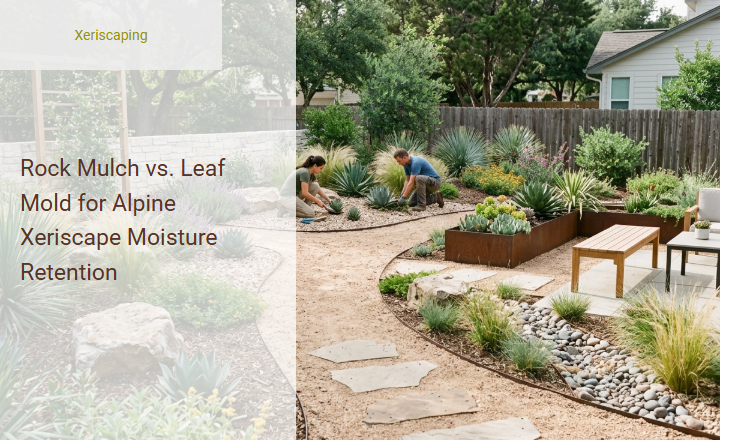
Alpine xeriscaping presents a harsh paradox: cultivating resilient, drought-tolerant plants while battling intense UV rays and desiccating winds that strip soil moisture in hours. High-altitude gardeners frequently struggle to keep vulnerable root zones hydrated without triggering root rot or compromising xeriscape aesthetics. Before selecting a top dressing, however, one must understand how high-elevation soil biology interacts with surface barriers.
Optimizing this interface grants your landscape self-regulating thermal protection and dramatic water savings, allowing alpine flora to thrive with minimal irrigation. Notably, success requires the stipulation that a material's efficacy depends heavily on your specific slope and soil chemistry; what stabilizes a steep incline may suffocate a flat basin. For instance, heavy crushed granite excels at wind resistance, whereas organic beech leaf mold actively feeds beneficial soil mycorrhizae.
This comparative analysis evaluates the performance of rock mulch versus leaf mold, examining their insulation properties, durability, and impact on soil health to help you select the ideal moisture-retention strategy for your alpine sanctuary.
Introduction to Alpine Xeriscaping and the Mulch Dilemma
Gardening in high-altitude environments presents a unique set of ecological obstacles. Alpine xeriscaping is the practice of designing low-water landscapes tailored to these rugged, elevated zones. In these areas, water conservation is not merely a preference but a survival strategy for cultivated flora. The cornerstone of any successful high-altitude xeriscape lies in the choice of ground cover, where moisture retention dictates whether a plant thrives or succumbs to desiccation.
This environmental demand brings us to a compelling horticultural debate: the choice between inorganic and organic surface covers. On one side stands rock mulch-gravel, river stone, and scree-offering mineral stability. On the other side is leaf mold, a biologically rich, crumbly organic material that mimics the protective layer of natural woodlands. Both options present distinct pathways to soil preservation, forcing gardeners to carefully weigh their physical and ecological properties.
The Harsh Realities of Alpine Microclimates
Alpine environments are defined by extreme, rapid shifts in weather that test the resilience of any garden. High-altitude sites are subjected to intense UV radiation, which degrades organic material and heats exposed soil surfaces rapidly. Furthermore, high winds sweep across slopes, accelerating transpiration from plant leaves and physically stripping moisture from the earth.
Compounding these atmospheric stresses is the nature of the soil itself. Alpine soils are often gravelly, coarse, and prone to rapid soil drainage. Because gravity and loose geological structures draw water away from root zones almost instantly, capturing and holding onto every drop of atmospheric precipitation becomes exceptionally difficult. Without a protective barrier, the soil surface crusts over, dries out, and leaves plant root systems highly vulnerable to extreme dehydration.
Rock Mulch: Mineral Stability and Heat Dynamics
Rock mulch represents a permanent, mineral-based solution that aligns perfectly with the raw, geological aesthetic of mountainous terrain. Consisting of varying sizes of gravel, crushed river rock, or natural volcanic scree, this inorganic ground cover is impervious to the decay processes that break down organic alternatives. Its significant weight ensures that it stays firmly in place, even when subjected to mountain gales.
The physical properties of rock mulch dictate its interaction with the surrounding microclimate. Some of its defining characteristics include:
- Inorganic Stability: Rocks do not decompose, eliminating the need for frequent replacement and preventing the introduction of competing weed seeds.
- High Thermal Mass: Stones absorb solar radiation during the day and radiate heat back into the soil and surrounding air during the night.
- Heavy Physical Weight: The density of gravel and river stone prevents soil erosion caused by heavy rain or strong alpine winds.
- Excellent Permeability: Water passes through rock layers instantly, preventing surface pooling and guiding moisture directly to the soil interface.
How Rock Mulch Retains Moisture in Arid Soils
Despite being dry to the touch, rock mulch utilizes unique physics to trap moisture within the soil profile. Because stones are poor conductors of heat compared to bare soil, a thick layer of rock acts as a barrier to direct evaporation. More importantly, rocks facilitate a natural condensation cycle beneath the surface. As night temperatures plunge in alpine zones, the rapid cooling of the rock layer causes moisture in the air to condense on the undersides of the stones, dripping directly back into the root zone.
However, this thermal property is a double-edged sword. During hot summer days, the accumulated thermal mass of rock mulch can raise soil temperatures, potentially stressing plants that are sensitive to root-zone heat.
"The interstitial spaces between stone mulches act as a thermal buffer, trapping cool air during the morning and initiating a condensation cycle as atmospheric temperatures shift, thereby providing a constant micro-source of moisture to dry soils."
Leaf Mold: The Forest Floor Analogy in Alpine Zones
Leaf mold is a highly valued organic amendment created through the slow, cool decomposition of deciduous leaves. Unlike standard garden compost, which relies on hot bacterial action, leaf mold is the product of fungal-dominated decomposition. This process breaks down complex lignins and leaves behind a dark, crumbly material that smells of the forest floor.
In alpine landscapes, leaf mold closely mimics the natural transition zones where sub-alpine forests meet open meadows. It replicates the thick carpet of decomposing organic litter that naturally accumulates under mountain conifers and deciduous shrubs, providing a rich, biologically active layer that supports a diverse network of soil microorganisms.
Leaf Mold's Sponge-Like Moisture Retention
From a hydrological perspective, leaf mold performs like a natural, living sponge. Because of its highly porous cellular structure, it can hold several times its dry weight in water. When winter snow melts or brief, intense summer rain showers hit the slopes, leaf mold captures this sudden influx of water, preventing rapid runoff and erosion.
Once saturated, leaf mold slowly and steadily releases this moisture back into the underlying soil. This gradual release keeps the soil in a state of consistent, moderate dampness rather than cycles of extreme wet and dry. Over time, as earthworms and microbes pull this organic material deeper, it improves the overall soil structure, turning sandy or gravelly mountain dirt into a more cohesive, water-retaining medium.
Direct Comparison: Thermal Regulation vs. Evaporation Control
Understanding the balance between temperature control and moisture conservation is key to choosing the correct mulch. While rock mulch excels at capturing condensation, it can overheat the root zone. Conversely, leaf mold acts as a superior insulator, keeping soil temperatures stable and cool during scorching summer afternoons.
| Property | Rock Mulch | Leaf Mold |
|---|---|---|
| Primary Moisture Mechanism | Condensation cycles & evaporation barrier | Sponge-like absorption & slow release |
| Soil Temperature Impact | Increases heat retention (warm roots) | Insulates and keeps soils cool |
| Longevity | Extremely high (permanent) | Moderate (degrades within 1-2 years) |
| Nutrient Contribution | None (inert) | High (enriches soil biology) |
Alpine Plant Compatibility: Scree Lovers vs. Meadow Dwellers
Different alpine flora have evolved to thrive in highly specific microhabitats, making plant compatibility a major deciding factor in mulch selection. True saxicole species, often called scree-loving plants, are adapted to growing in pure rock cracks and gravel slopes. Plants such as Saxifraga, Sempervivum, and low-growing alpine phlox thrive under rock mulch because they require perfect drainage around their crowns to prevent rot.
In contrast, alpine meadow dwellers and species native to transition forests prefer a richer environment. Plants like columbines (Aquilegia), alpine asters, and native gentians thrive under a layer of leaf mold. The organic matter provides the consistent moisture and mild, cool root environments these species need to survive the summer heat.
Durability, Maintenance, and Wind Resistance
The practical realities of maintaining an alpine xeriscape require an analysis of how each material holds up against the elements over time. High-altitude gardening is characterized by fierce, gusty winds that can easily strip lightweight materials from the ground surface, making durability a critical metric.
- Wind Resistance: Rock mulch is virtually immune to wind displacement, whereas dry leaf mold can be easily blown away during dry winter periods if not kept slightly damp or protected by plant cover.
- Replenishment Frequency: Mineral mulches are a one-time investment, requiring only occasional weeding. Organic leaf mold decomposes naturally and must be replenished every year or two to maintain its water-retaining properties.
- Soil Compaction: Heavy stones can compact delicate soils over time, whereas lightweight leaf mold keeps the soil structure loose, airy, and well-aerated.
Strategic Integration: Choosing the Right Mulch for Your Alpine Xeriscape
Achieving optimal moisture retention in a high-altitude landscape does not require an all-or-nothing choice. Instead, the most successful alpine xeriscapes rely on a zoned, strategic integration of both materials. By matching the physical properties of the mulch to the microclimate of each garden zone, you can maximize water efficiency and plant health simultaneously.
Use rock mulch in exposed, windy areas, steep gravel slopes, and around drought-tolerant rock succulents that demand rapid drainage. Reserve leaf mold for sheltered microclimates, depressions that collect moisture, and around woodland-edge plants that require cool, damp soils. Implementing a hybrid mulching system allows you to harness the mineral durability of stone alongside the rich, biological water-retention of organic matter, establishing a resilient and beautiful alpine oasis.
| Feature | Rock Mulch (Scree/Gravel) | Leaf Mold |
|---|---|---|
| Drainage & Moisture | Excellent drainage; prevents crown rot by keeping moisture away from plant collars. | High water retention; can trap excess moisture and rot sensitive alpine roots. |
| Nutrient Levels | Inert/negligible; maintains the "lean" (nutrient-poor) soil alpines require. | Rich in organic humus; may over-fertilize, causing weak, floppy growth. |
| Thermal Regulation | Reflects surface heat while keeping root zones cool and insulated beneath. | Insulates and warms the soil; lacks the cooling properties of rocky scree. |
| Pest & Weed Control | Suppresses weeds; deters slugs and snails with sharp, dry surfaces. | May harbor weed seeds; provides a damp habitat attractive to slugs. |
| Habitat Simulation | Accurately replicates natural alpine talus, scree, and crevice environments. | Replicates woodland floor conditions; unsuitable for true high-altitude alpines. |
Leave a comment