
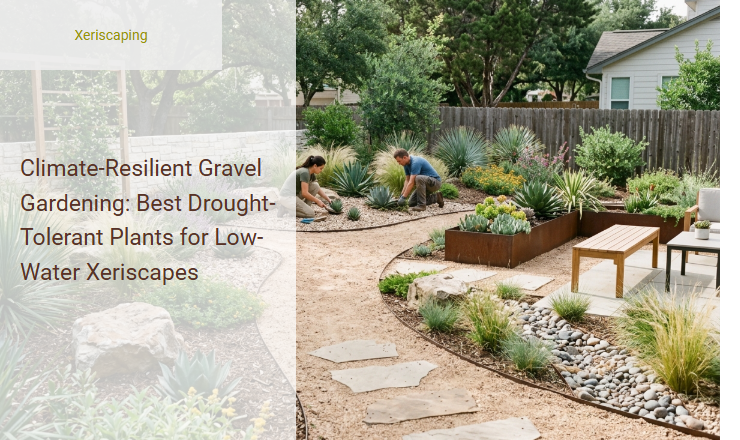
As summers grow increasingly hot and municipal water restrictions tighten, maintaining a traditional, moisture-thirsty lawn has become an expensive and frustrating battle for homeowners. To adapt to this shifting climate, many are moving away from high-irrigation landscapes toward sustainable, resource-conscious outdoor designs.
Embracing a gravel garden grants you a highly resilient, structurally striking landscape that slashes water utility costs while thriving on minimal maintenance. However, successful xeriscaping is not merely about scattering stone; it requires a foundational understanding of soil drainage and strategic plant selection to prevent root rot during wet seasons.
By pairing porous aggregates with ultra-hardy species like Lavandula angustifolia (English Lavender) and drought-defying Sedum, you can achieve a dynamic, textured garden that flourishes in heat. In this guide, we will outline the core principles of gravel garden construction and highlight the best drought-tolerant plants to secure your landscape's future.
Read also: Straw Wattle vs Geotextile Fabric for Slope Stabilization
Section 1: Introduction to Climate-Resilient Gravel Gardening
As global temperatures rise and water resources become increasingly scarce, traditional lush green lawns are fast becoming unsustainable relics of the past. Climate-resilient gravel gardening offers a sophisticated, ecological alternative that aligns with the demands of modern conservation. This innovative landscaping style relies on a gravel mulch matrix that minimizes evaporation and thrives on natural rainfall.
By embracing this technique, homeowners can transition away from high-maintenance turfgrass toward a dynamic, biodiverse ecosystem. Gravel gardening represents the future of sustainable landscaping, proving that low-water yards can be remarkably vibrant, visually striking, and profoundly adaptive to our changing planet.
Section 2: Core Principles of Xeriscaping
Xeriscaping is a structured approach to landscaping that prioritizes water conservation through thoughtful design and appropriate plant selection. Integrating gravel layers into this system enhances its efficiency by creating a highly functional protective barrier over the soil.
The foundational principles of this methodology depend heavily on how inorganic mulches interact with the local environment:
- Moisture Retention: Gravel prevents the sun from directly baking the soil surface, significantly reducing water loss through evaporation.
- Thermal Regulation: A thick layer of aggregate buffers soil temperatures, keeping roots cooler during intense summer heatwaves and insulated during sudden winter freezes.
- Weed Suppression: By creating a dry, nutrient-poor surface layer, gravel discourages weed seeds from germinating, reducing competition for scarce water resources.
Section 3: Site Assessment and Layout Design
Evaluating Your Landscape Resources
Before moving any stone, you must carefully analyze your garden's microclimates. Observe how sun exposure shifts throughout the day, noting hot zones along south-facing walls and cooler, shaded areas. Drainage is equally vital; gravel gardens require superb drainage to prevent plant root rot, meaning low-lying, swampy spots must be graded or elevated before planting begins.
Section 4: Structural Succulents and Cacti
Creating Architectural Impact with Dry-Loving Flora
Succulents and cacti serve as the living sculptures of the gravel garden, offering bold shapes and clean lines that look stunning against a minimalist stone backdrop. These plants have evolved specialized tissue to store water, making them perfectly suited for drought-prone regions.
- Agave americana - Features striking, blue-green rosettes that provide a dramatic focal point.
- Opuntia ficus-indica - Offers flat, paddle-like segments and vibrant yellow flowers in late spring.
- Yucca filamentosa - Produces sword-like leaves and tall, creamy white flower spikes that attract pollinators.
Section 5: Ornamental Grasses for Movement and Texture
Softening the Stone Landscape
While gravel and cacti provide structure, ornamental grasses bring essential motion and softness to the garden. As wind passes through their slender blades, they sway gracefully, introducing a sensory, kinetic element that keeps the landscape from feeling static.
Blue Fescue (Festuca glauca) forms tight, icy-blue mounds that contrast beautifully with dark grey gravel, while Feather Reed Grass (Calamagrostis x acutiflora) adds vertical dramatic height.
Section 6: Resilient Mediterranean Herbs and Flowering Perennials
Vibrant Colors in Nutrient-Poor Soils
Many of the most beautiful flowering plants actually prefer lean, sandy, and rocky soils over rich, organic potting mixes. Mediterranean herbs and hardy perennials thrive under these tough conditions, producing aromatic oils and abundant blooms with very little water.
- Lavender (Lavandula angustifolia): Known for its iconic purple spikes and calming scent, it thrives in dry heat.
- Rosemary (Salvia rosmarinus): A rugged evergreen shrub that features needle-like leaves and delicate blue blossoms.
- Yarrow (Achillea millefolium): A pollinator-friendly perennial with flat-topped flower clusters that survive severe droughts.
Section 7: Soil Preparation and Planting Techniques
- Clear existing vegetation: Remove all turfgrass and deep-rooted weeds from the designated area.
- Amend for drainage: Mix coarse sand, grit, or fine gravel into the top six inches of native soil to improve aeration and water runoff.
- Position the plants: Arrange your potted plants across the space to visualize the final layout before digging.
- Dig and plant: Dig a hole twice as wide as the root ball, insert the plant, and backfill with the amended soil mixture.
- Apply the aggregate: Spread a two-to-three-inch layer of clean gravel over the entire area, ensuring the stone does not press directly against the plant stems.
Section 8: Choosing the Right Gravel and Aggregate Mulch
The type of stone you select dictates both the aesthetic style and the thermal performance of your garden. Darker stones absorb heat, which can benefit plants in cooler regions but may overheat roots in desert areas. Lighter stones reflect sunlight, keeping the soil cooler but potentially creating harsh glare.
| Aggregate Type | Common Size | Best Used For | Thermal Impact |
|---|---|---|---|
| Pea Gravel | 3/8 inch | General planting beds and walking paths | Moderate heat retention |
| Crushed Granite | 1/4 inch to dust | Compacted pathways and natural rock gardens | High heat retention |
| River Rock | 1 to 3 inches | Dry creek beds and decorative borders | Low heat retention, allows excellent airflow |
Section 9: Smart Irrigation and Water Management
Optimizing Delivery for Maximum Efficiency
Even drought-tolerant plants require regular moisture during their first one to two years to establish deep, healthy root systems. The most effective delivery method is a subsurface drip irrigation system, which delivers water directly to the root zone without losing a single drop to wind or evaporation.
"Deep, infrequent watering encourages roots to grow downward into the cooler, moister layers of soil, creating a far more resilient plant than frequent, shallow watering." - Sustainable Landscaping Practice Manual
Section 10: Seasonal Maintenance and Care
One of the greatest benefits of a climate-resilient gravel garden is its minimal upkeep. Unlike traditional lawns that demand weekly mowing, a gravel landscape requires only light, periodic attention to maintain its clean, striking appearance.
- Spring: Prune back dead flower stalks and old ornamental grass foliage to make room for new growth.
- Summer: Hand-pull any stray weeds that manage to sprout in the gravel matrix before they go to seed.
- Autumn: Use a leaf blower or rake to gently clear fallen leaves and organic debris from the stone surface to prevent soil buildup.
- Winter: Check drainage pathways to ensure heavy seasonal rains can flow away from succulent root crowns.
Summary
Gravel gardening has emerged as a premier sustainable landscaping solution for regions facing water scarcity and extreme climate shifts. This innovative gardening style utilizes a gravel mulch layer to conserve soil moisture, suppress weeds, and regulate temperature, creating an ideal environment for drought-tolerant species. By shifting from high-maintenance lawns to low-water xeriscapes, homeowners can significantly reduce municipal water consumption while fostering local biodiversity.
The best plants for these resilient landscapes include deep-rooted Mediterranean herbs like lavender and rosemary, structural succulents, and ornamental grasses such as blue fescue. Additionally, hardy perennials like yarrow and coneflowers thrive in these lean, well-draining conditions. Embracing climate-resilient gravel gardening not only slashes maintenance and irrigation demands but also yields a vibrant, ecologically supportive, and visually striking outdoor space that flourishes year-round with minimal intervention.
Leave a comment