
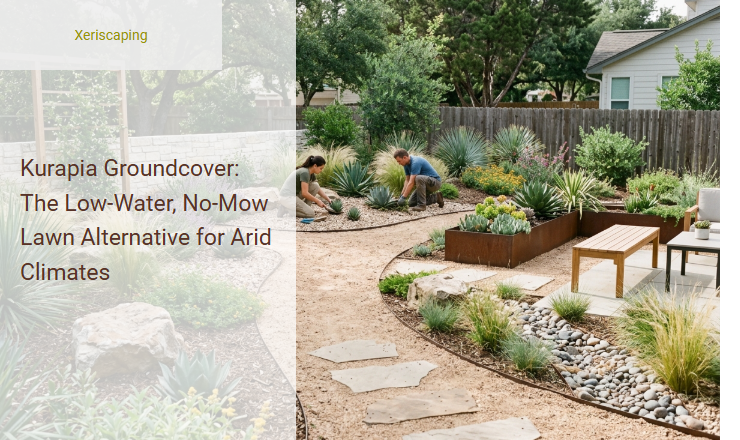
Maintaining a lush, green lawn in arid regions has become an exhausting battle against rising water rates, strict drought mandates, and the relentless chore of mowing. Yet, completely replacing living lawns with sterile rock mulch often compromises a home's curb appeal and increases ambient temperatures around the property.
This environmental dilemma has led modern landscapers to seek a sustainable bridge between high-maintenance turfgrass and barren xeriscaping. Kurapia groundcover represents this ideal compromise, granting homeowners a vibrant, cushiony green aesthetic while slashing irrigation needs by up to 60%.
However, successful adoption requires a realistic stipulation: while exceptionally drought-tolerant once established in USDA zones 7b through 11, Kurapia requires diligent watering during its initial root-development phase and is best suited for moderate rather than heavy, athletic foot traffic.
In this guide, we will analyze Kurapia's growth habits, evaluate its long-term maintenance costs, and outline the step-by-step installation process to help you transition to a climate-resilient landscape.
Read also: Gravel vs Wood Chips for Weed Suppression
Introduction to Kurapia Groundcover
In the face of shifting climates and persistent droughts, homeowners and landscape designers are actively seeking sustainable alternatives to thirsty, high-maintenance lawns. Kurapia has emerged as a revolutionary solution in this space. Developed in Japan as a sterile hybrid of the native species Lippia nodiflora, this innovative groundcover is engineered specifically to provide a lush, green aesthetic while conserving vital water resources.
Unlike traditional grass, this sterile cultivar does not produce viable seeds, meaning it will not invade neighboring natural ecosystems or crop fields. Its rapid lateral growth allows it to establish quickly, creating a dense, cushioned carpet that stands up to foot traffic. As municipal water restrictions tighten across drought-prone regions, this remarkable plant is rapidly gaining popularity as the premier turf alternative for modern, eco-conscious landscapes.
The Ultimate Low-Water, No-Mow Benefits
Switching from standard turfgrass to this modern groundcover yields immediate rewards for both your weekend schedule and your utility bills. Its biology is naturally geared toward extreme efficiency, offering a pair of primary advantages that traditional lawns simply cannot match:
- Unmatched Water Savings: Due to its incredibly deep, robust root system, it can survive and thrive on up to 60% less water than standard cool-season grasses.
- Virtually Zero Mowing: Because it naturally grows low to the ground, reaching a maximum height of only a few inches, it completely eliminates the exhausting chore of weekly mowing.
By establishing this deep-rooting groundcover, homeowners can enjoy a perpetually green yard without the constant hum of lawnmowers or the guilt of high water consumption.
Climate and Soil Adaptability
One of the most remarkable traits of this hybrid is its sheer resilience under tough conditions. It thrives across a wide geographic range, effortlessly tolerating the extreme heat of arid summers as well as light frost during the winter months. It is particularly well-suited for the challenging climates of the US Southwest and other semi-arid regions around the globe.
Soil quality is rarely a barrier to success. Whether your yard consists of heavy, compacted clay or loose, fast-draining sand, this plant adapts readily. Furthermore, its high tolerance for salinity makes it an excellent choice for coastal properties and areas that rely on recycled or reclaimed water for irrigation purposes.
Kurapia vs. Traditional Turf: A Comparison
| Metric | Kurapia Groundcover | Traditional Bermuda Grass |
|---|---|---|
| Water Usage | Very Low (Saves up to 60%) | High to Very High |
| Mowing Frequency | Rarely (Optional for flower control) | Weekly during summer |
| Traffic Tolerance | Moderate to High | High |
| Fertilizer Needs | Minimal to None | Regular seasonal applications |
Planting and Establishment Guidelines
Because this sterile hybrid does not produce seeds, it must be established using live plugs. Proper preparation and early care are essential to ensure rapid, seamless ground coverage across your yard.
- Soil Preparation: Clear the area of all existing weeds and debris. Lightly till the soil and incorporate organic compost to encourage rapid root penetration.
- Layout and Spacing: Space the plugs roughly 12 to 18 inches apart in a staggered, diamond-shaped grid pattern.
- Planting: Dig a small hole for each plug, insert it so the top of the root ball is flush with the soil surface, and press firmly around the edges.
- Initial Watering: Thoroughly saturate the entire planting area immediately after setting the plugs to eliminate any underlying air pockets.
Efficient Irrigation and Watering Schedules
While this groundcover is celebrated for its incredible drought tolerance, achieving those water-saving benefits requires a strategic transition in your irrigation habits from the day of planting to full maturity.
The Establishment Phase
- Water daily or multiple times a day in short bursts to keep the soil consistently moist.
- Maintain this high-frequency schedule for the first 2 to 3 weeks until the roots begin to spread.
The Mature Phase
- Transition to deep, infrequent watering cycles to encourage the roots to grow deep into the soil.
- Irrigate only once or twice a week during the peak of summer, and scale back significantly during the cooler months.
Maintenance, Mowing, and Weed Management
Ongoing maintenance is refreshingly simple compared to a standard lawn, but a small amount of proactive care will keep your groundcover looking its absolute best throughout the year.
Managing Early Weed Competition
Before the plugs fully expand and knit together into a dense mat, open soil spaces are vulnerable to weeds. Hand-pulling weeds early on or using targeted selective herbicides recommended for broadleaf control can protect your young plants. Once the groundcover is fully established, its thick canopy naturally chokes out the vast majority of competing weed seeds.
To Mow or Not to Mow?
Mowing is entirely optional. However, some homeowners prefer to run a lawnmower over the area once or twice a year. A light mowing in late autumn can easily shear off the spent white flowers, restoring a clean, uniform green look for the winter season.
Seasonal Appearance and Aesthetic Appeal
This groundcover offers a dynamic, visually pleasing landscape that shifts gracefully with the changing seasons, providing a lively alternative to mono-culture turfgrass.
"From late spring through autumn, the dense green canopy is dusted with thousands of tiny, elegant white flowers, creating a whimsical, meadow-like aesthetic that dances in the breeze."
During the coldest months of winter, the plant enters a period of semi-dormancy. Depending on your local climate, it may lose some of its vibrant green color and take on a slightly muted, brownish hue. As soon as the spring warmth returns, it quickly wakes up, pushing out fresh green growth to restore its lush, carpet-like appearance.
Ecological Benefits and Pollinator Support
Beyond its beauty and water savings, this groundcover plays an active role in supporting local ecosystems and protecting the surrounding environment from chemical pollution.
Because of its dense, interlocking root system, it is highly effective at stabilizing soil on slopes and preventing costly erosion during heavy rain events. Additionally, it requires minimal to no chemical fertilizers, which drastically reduces toxic runoff into local waterways. Its low maintenance profile means far less air pollution from gas-powered garden tools.
Is Kurapia Right for Your Landscape?
Deciding to transition away from traditional turf is a significant step toward a more sustainable lifestyle. This sterile hybrid offers an exceptional balance of low water usage, minimal maintenance, and year-round soil protection. It is highly suited for open, sunny areas, slopes, and low-traffic zones where traditional grass struggles to survive without excessive pampering.
However, keep in mind that its lush flowering habit does attract bees, which may be a consideration for households with severe bee allergies. If your goal is to dramatically cut your utility bills, eliminate weekly mowing chores, and establish a resilient, eco-friendly garden, making the switch is one of the most impactful choices you can make for your property. Embrace the future of landscaping today by planning your transition to this water-wise groundcover.
Summary
Kurapia is a revolutionary, low-water, no-mow groundcover designed as a sustainable alternative to traditional turf lawns in arid and semi-arid climates. Developed from the native plant Lippia nodiflora, this sterile hybrid is highly resilient, non-invasive, and allergen-free. It establishes a deep root system that thrives on up to 60% less water than standard grass, offering significant utility savings.
Its dense, low-growing habit effectively suppresses weeds and entirely eliminates the need for mowing. Kurapia tolerates light to moderate foot traffic, adapts to various soil types, and produces delicate white flowers that support local pollinators. For homeowners and landscapers seeking a drought-tolerant, low-maintenance, and lush green aesthetic, Kurapia serves as an eco-friendly landscaping solution that drastically reduces yard work and environmental impact.
Leave a comment