
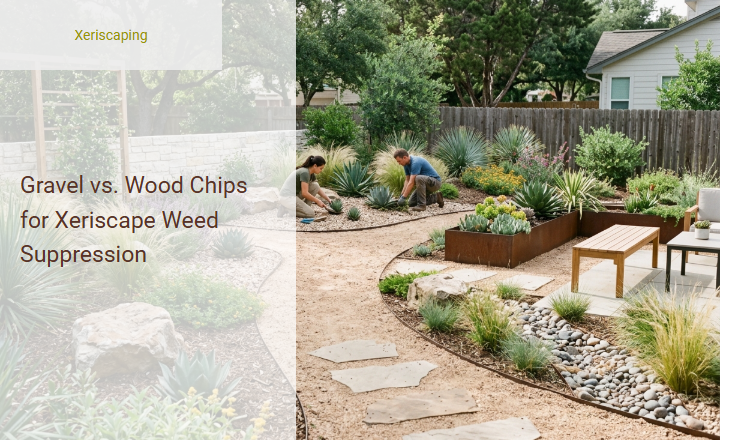
Managing weeds in a xeriscaped yard can feel like an endless battle, especially when stubborn invaders compromise your clean, low-water aesthetic. While adopting drought-tolerant landscaping drastically reduces water utility costs, selecting the wrong ground cover can inadvertently turn your yard into a hotbed for seed germination. Fortunately, choosing the right suppression material grants you long-term maintenance freedom, saving you hours of physical labor and reducing the need for chemical herbicides.
Stipulation: While both inorganic and organic mulches significantly hinder weed growth, no barrier is entirely weed-proof. Resilient species like puncturevine and crabgrass can eventually exploit neglected gaps in any material.
To help you make an informed decision, this guide compares the durability, cost, and thermal properties of gravel versus wood chips, outlining which medium offers the best defense for your specific climate.
Introduction: The Xeriscape Mulch Dilemma
Designing a low-water landscape, or xeriscape, involves a fundamental choice that impacts both aesthetics and maintenance: selecting the right ground cover. Weed suppression is often the primary goal of this choice. Homeowners and landscapers frequently find themselves debating between two dominant options: gravel and wood chips.
The core difference lies in their classification. Gravel acts as an inorganic mulch, providing a permanent, non-decaying surface that relies on physical weight to block unwanted growth. Conversely, wood chips are an organic mulch, working with natural biological processes to suppress weeds while actively changing the soil biology below. Understanding how these two distinct materials function is key to achieving a pristine, weed-free xeriscape.
Gravel Mulch: The Inorganic Weed Barrier
Gravel serves as a highly durable barrier against unwanted vegetation. Because stones do not decompose, a thick layer of gravel provides a permanent physical shield over the soil. The sheer weight of the rocks compresses the soil surface, making it incredibly difficult for buried weed seeds to push through to the surface.
In addition to its weight, gravel excels at light deprivation. By blocking sunlight from reaching the soil surface, it prevents the photosynthesis necessary for weed seed germination. To achieve optimal weed control, landscapers typically recommend a depth of at least two to three inches of stone, ensuring that virtually no light penetrates the rocky matrix.
Wood Chips: The Organic Weed Suppressor
Wood chips suppress weeds through a combination of physical obstruction and biological processes. When spread thickly, wood chips create a dense, interlocking mat that blocks sunlight and deprives underlying weed seeds of the light they need to sprout. This natural compaction layer serves as an effective physical barrier against weed emergence.
Furthermore, as wood chips slowly decay, they consume nitrogen at the soil-mulch interface. This localized nutrient depletion makes the immediate surface environment highly inhospitable to shallow-rooted weed seeds that try to germinate. The natural decomposition process also supports beneficial fungi that further disrupt weed growth cycles, making organic mulch a dynamic opponent to invasive plants.
The Role of Landscape Fabric Underlayment
The necessity of a weed barrier fabric depends heavily on the type of mulch you choose. Underneath gravel, a high-quality landscape fabric is considered essential to prevent the stones from sinking into the soil and to keep dirt from mixing with the rocks.
For wood chips, the use of landscape fabric is generally discouraged. Here is how the application differs between the two materials:
- Gravel with fabric is essential for separating rock from soil, preventing weed emergence from below, and facilitating future cleanup.
- Gravel without fabric sinks into the dirt quickly, creating a muddy, weed-prone mess that is difficult to remediate.
- Wood chips with fabric prevents the organic matter from enriching the soil and creates a slippery layer where sliding mulch exposes the fabric to UV damage.
- Wood chips without fabric allows the mulch to decompose directly into the soil, improving soil structure and fostering a healthy ecosystem that naturally resists weeds.
Maintenance and Longevity Battles
While gravel is often marketed as a maintenance-free option, it requires a different kind of upkeep than wood chips. Over time, wind blows dust, leaves, and organic debris into the spaces between the stones. If this debris is not regularly blown out, washed, or vacuumed, it decays and creates a fertile compost layer right on top of the landscape fabric, leading to stubborn weed growth.
Wood chips, on the other hand, require regular replenishment. Because they biodegrade, a wood chip mulch layer will decompose and thin out every one to three years. To maintain their weed-suppression capabilities, you must top them off with a fresh layer periodically. While this requires manual labor and recurring material costs, it avoids the tedious task of deep-cleaning rocks.
Weed Seed Germination: Airborne Threats
Even if you block weeds from sprouting from the soil beneath, airborne weed seeds pose a constant threat. These seeds are carried by wind, birds, and water, landing directly on top of your mulch. How each mulch type handles these invaders changes drastically over time.
In a gravel system, as dirt and dust accumulate between the stones, they create a perfect pocket of soil. When an airborne seed lands in this rocky crevice, it finds a protected, warm environment with easy access to moisture, leading to rapid germination. Conversely, while decomposing wood chips also create a seedbed, the constant shifting and biological activity of decaying organic matter can make it harder for weed roots to secure a permanent foothold compared to stable gravel pockets.
Soil Health and Moisture Dynamics
The choice between organic and inorganic mulch has profound effects on the soil biology beneath. Wood chips act as a sponge, retaining moisture during dry spells and slowly releasing it into the soil. As they decompose, they feed beneficial microbes and earthworms, creating a rich, fertile soil structure that supports robust ornamental plant growth, which naturally crowds out weeds.
Cost Analysis: Upfront vs. Long-Term Investment
The financial commitment for these two ground covers varies significantly when comparing the initial installation costs to the multi-year maintenance expenses. Gravel requires a much higher upfront investment for materials and delivery, but it does not need to be replaced. Wood chips are inexpensive initially but demand ongoing purchases for replenishment.
| Mulch Type | Upfront Cost | Lifespan | Long-Term Cost |
|---|---|---|---|
| Gravel | High | Decades | Low (primarily cleaning labor) |
| Wood Chips | Low to Moderate | 1 to 3 Years | Moderate (periodic replenishment) |
Aesthetic Considerations for Xeriscapes
The visual style of your xeriscape should harmonize with your local environment and architecture. Gravel offers a clean, modern, and highly structured appearance. It is ideal for arid desert themes, southwestern landscaping, and minimalist designs. It pairs beautifully with cacti, succulents, and ornamental grasses that thrive in dry, rocky soils.
Wood chips provide a softer, more natural forest-floor aesthetic. This option is perfect for mediterranean or woodland xeriscapes where a lush, organic look is desired. Wood chips look highly integrated around native shrubs, perennial wildflowers, and fruit trees, offering a warmer visual tone than stark river rock or crushed granite.
The Final Verdict: Which Mulch Wins?
Choosing the best mulch depends on your climate, aesthetic goals, and willingness to perform specific types of maintenance. Both options excel at weed suppression when installed and managed correctly.
Consider this quick guide to help make your decision:
- Choose gravel if you want a permanent, fire-safe barrier for an arid climate and are prepared to blow out organic debris annually.
- Choose wood chips if you want to improve poor soil, maintain cooler soil temperatures, and do not mind top-dressing the area every couple of years.
- Gravel works best when paired with heavy-duty landscape fabric to prevent rocks from sinking.
- Wood chips work best applied directly to the soil, allowing natural decomposition to suppress weed seeds biologically.
The right choice is the one that aligns with your regional climate and fits your long-term gardening routine, ensuring a beautiful, low-maintenance xeriscape for years to come.
| Feature | Gravel (Inorganic) | Wood Chips (Organic) |
|---|---|---|
| Suppression Mechanism | Physical weight and light deprivation. Requires heavy-duty underlayment fabric to prevent root-to-soil contact. | Physical smothering (optimal at 3-4 inch depth) and light blockage. Softwood species can chemically inhibit seed germination. |
| Lifespan & Durability | Permanent. Non-biodegradable; does not break down or blow away. | Temporary. Biodegrades within 1 to 3 years; requires periodic replenishment to maintain effective depth. |
| Long-Term Weed Risk | High. Windblown soil and organic debris accumulate between stones over time, creating a fertile seedbed above the fabric. | Moderate. Decomposing lower layers turn into nutrient-rich humus that supports weed growth if new chips are not applied. |
| Soil & Moisture Impact | Increases soil temperatures; accelerates evaporation; does not enrich soil biology. | Regulates soil temperature; retains soil moisture; enriches soil organic matter and microbial activity upon decomposition. |
| Cost Profile | High initial capital expenditure (materials, underlayment, edging) but very low ongoing maintenance costs. | Low initial cost (often free via local arborists) but high recurring labor and material costs for periodic top-offs. |
Leave a comment